
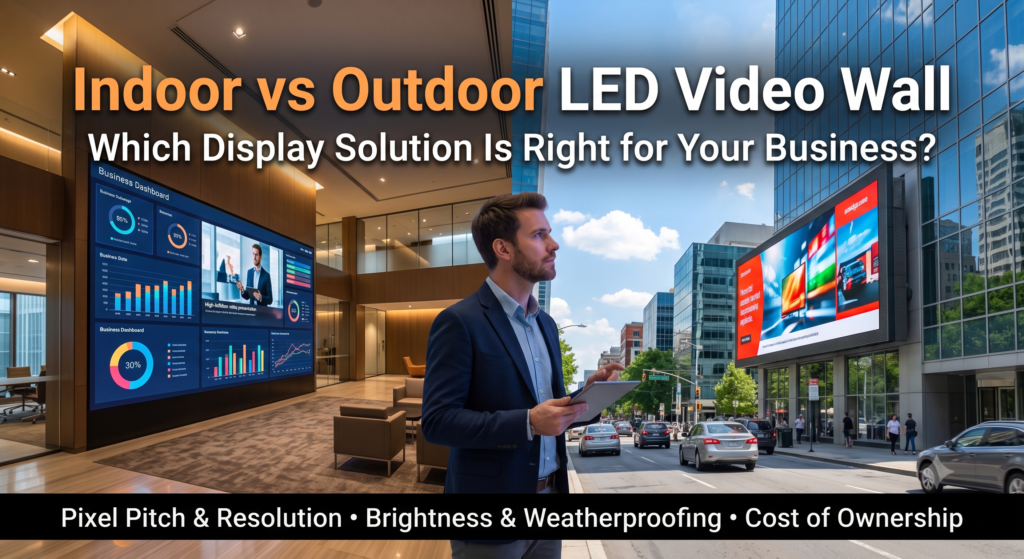
Choosing an LED video wall is a major investment for businesses that want to improve visibility, customer engagement, and digital communication. However, one of the most important decisions before purchasing an LED display is selecting the right type: indoor LED video wall or outdoor LED video wall.
Although both systems use LED technology to create large, high-quality visuals, they are designed for completely different environments. Factors such as brightness, viewing distance, weather protection, pixel pitch, installation location, and maintenance requirements determine which solution will deliver the best results.
This guide explains the key differences between indoor and outdoor LED video walls to help businesses choose the right display solution.
What Is an LED Video Wall?
An LED video wall is a large digital display created by combining multiple LED modules or panels into one seamless screen.
Unlike traditional LCD displays, LED video walls are highly customizable and can be designed for different sizes, shapes, and applications.
Businesses use LED video walls for:
- Advertising campaigns
- Corporate communication
- Retail branding
- Public information systems
- Events and exhibitions
- Stadium displays
- Transportation hubs
The choice between indoor and outdoor LED video walls depends mainly on the installation environment.
Indoor LED Video Wall: Overview
An indoor LED video wall is designed for controlled environments where the display is protected from direct sunlight, rain, dust, and extreme weather conditions.
These displays focus mainly on:
- High image quality
- Fine resolution
- Close viewing experience
- Smooth visual performance
Common Applications of Indoor LED Video Walls
Indoor LED displays are commonly installed in:
- Shopping malls
- Corporate offices
- Conference rooms
- Retail stores
- Exhibition halls
- Control rooms
- Hotels
- Educational institutions
Features of Indoor LED Video Walls
1. Higher Resolution and Smaller Pixel Pitch
Indoor environments usually have shorter viewing distances. Therefore, businesses often require displays with smaller pixel pitch.
A smaller pixel pitch provides:
- Sharper images
- Better text visibility
- Smoother videos
- Detailed graphics
This makes indoor LED video walls suitable for presentations, advertisements, and interactive content.
2. Moderate Brightness Levels
Indoor displays do not need extremely high brightness because they operate under controlled lighting conditions.
Lower brightness helps provide:
- Comfortable viewing
- Better color accuracy
- Reduced eye strain
3. Lightweight Design
Indoor LED panels are generally lighter because they do not require heavy weather protection.
This makes installation easier for:
- Walls
- Retail environments
- Office interiors
Outdoor LED Video Wall: Overview
Outdoor LED video walls are engineered to operate in challenging environments, including sunlight, rain, dust, and temperature changes.
They are designed for:
- High visibility
- Durability
- Long operating hours
- Weather resistance
Common Applications of Outdoor LED Video Walls
Outdoor LED displays are used for:
- Roadside advertising
- Building facades
- Stadiums
- Public announcements
- Shopping center exteriors
- Transportation areas
- Political campaigns
- Large events
Features of Outdoor LED Video Walls
1. Higher Brightness
Outdoor environments receive direct sunlight, making visibility challenging.
Outdoor LED video walls use higher brightness levels to ensure content remains visible throughout the day.
Benefits include:
- Clear visibility in sunlight
- Strong advertising impact
- Better audience engagement
2. Weather Protection
Outdoor LED displays are built with protective features such as:
- Water resistance
- Dust protection
- Strong cabinets
- Durable components
These features help the display perform reliably in different weather conditions.
3. Larger Pixel Pitch Options
Outdoor displays are usually viewed from a greater distance.
Because viewers are farther away, larger pixel pitch options are commonly used.
This provides:
- Cost efficiency
- Strong visibility
- Suitable viewing distance performance
Indoor vs Outdoor LED Video Wall: Key Differences
| Feature | Indoor LED Video Wall | Outdoor LED Video Wall |
| Environment | Controlled indoor areas | Outdoor locations |
| Brightness | Moderate | High brightness |
| Weather Protection | Limited requirement | Weather-resistant design |
| Pixel Pitch | Smaller pixel pitch | Larger pixel pitch options |
| Viewing Distance | Short distance | Long distance |
| Installation | Offices, malls, stores | Roads, buildings, stadiums |
| Cost | Generally lower | Higher due to protection features |
| Maintenance | Easier access | Requires outdoor-grade components |
How to Choose Between Indoor and Outdoor LED Video Walls?
1. Consider Installation Location
The first question is:
Where will the LED display be installed?
Choose:
Indoor LED Video Wall if:
- The display is inside a building
- Audience viewing distance is short
- Image details are important
Choose:
Outdoor LED Video Wall if:
- The display is exposed to sunlight
- Weather protection is required
- Long-distance visibility is needed
2. Evaluate Viewing Distance
Viewing distance directly affects pixel pitch selection.
For example:
- Close viewers → smaller pixel pitch
- Distant viewers → larger pixel pitch
A professional LED display manufacturer can recommend the correct specification based on your installation area.
3. Understand Content Requirements
Different businesses display different types of content.
Indoor applications often require:
- Presentations
- Product videos
- Detailed graphics
- Text-heavy information
Outdoor applications often focus on:
- Advertisements
- Brand messages
- Public communication
- Large visual content
4. Consider Maintenance and Operating Conditions
Outdoor displays require more attention because they face environmental exposure.
Businesses should consider:
- Access for maintenance
- Replacement parts availability
- Manufacturer support
- Warranty coverage
Indoor vs Outdoor LED Video Wall Price Difference
The LED video wall price depends on multiple factors, including:
- Screen size
- Pixel pitch
- Brightness
- Installation requirements
- Display technology
Outdoor LED video walls are generally more expensive because they require:
- Higher brightness
- Weather-resistant cabinets
- Additional protection systems
Indoor LED video walls may have lower costs because they operate in controlled environments.
However, selecting the cheapest option is not always the best approach. The right display should match the installation environment and long-term business goals.
Which Industries Need Indoor LED Video Walls?
Retail Businesses
Indoor LED displays help stores create:
- Digital advertisements
- Product promotions
- Brand experiences
Corporate Offices
Companies use indoor LED video walls for:
- Reception displays
- Meeting rooms
- Internal communication
Education and Training Centers
Applications include:
- Digital classrooms
- Training presentations
- Information displays
Which Industries Need Outdoor LED Video Walls?
Advertising Companies
Outdoor LED displays provide dynamic advertising opportunities in high-traffic areas.
Stadiums and Events
Large LED screens improve:
- Audience experience
- Live viewing
- Sponsor visibility
Transportation Hubs
Airports and stations use outdoor LED displays for:
- Information updates
- Advertising
- Public announcements
Why Choose an Experienced LED Video Wall Manufacturer?
Selecting the right manufacturer is just as important as selecting the right display type.
A reliable LED video wall manufacturer should provide:
- Product consultation
- Site assessment
- Customized solutions
- Professional installation
- Technical support
Businesses should review previous projects and ensure the manufacturer understands their industry requirements.
Frequently Asked Questions (FAQs)
What is the main difference between indoor and outdoor LED video walls?
The main difference is their design purpose. Indoor LED video walls focus on high resolution and close viewing, while outdoor LED video walls focus on brightness, durability, and weather resistance.
Can an indoor LED video wall be used outdoors?
No. Indoor LED displays are not designed to handle direct sunlight, moisture, dust, or weather conditions.
Are outdoor LED video walls more expensive?
Generally, outdoor LED video walls cost more because they require higher brightness and protective features.
Which LED video wall is better for advertising?
It depends on location. Indoor advertising works better with indoor LED displays, while roadside and outdoor advertising require outdoor LED video walls.
How long does an LED video wall last?
A high-quality LED video wall can provide long-term performance when properly installed and maintained.
Conclusion
The choice between an indoor and outdoor LED video wall depends on your business environment, audience distance, content requirements, and budget.
Indoor LED video walls are ideal for businesses that need high-resolution visuals in controlled spaces, while outdoor LED video walls are designed for maximum visibility and durability in challenging environments.
Before investing, businesses should work with an experienced LED video wall manufacturer to select the right technology, specifications, and installation approach.
A properly selected LED display solution can become a powerful tool for advertising, communication, and customer engagement.